What is Website Strategy? A Practical Guide for Growing Companies
The TLDR: Understanding what website strategy is, what it includes, why it matters, and when a business needs it.
Most companies have a website. Not every website, though, is doing much to help drive that company forward.
Internally, we’ve found it useful to think about business websites in two ways: those built for presence and those built for performance.
Presence websites are generally built to do one thing well: provide a company with a credible, consistent online presence.
The primary goal isn’t necessarily future growth, generating a steady stream of leads, or being found through search. Most often, the business needs a good-looking, professional website that accurately represents the organization and gives people a reliable place to learn more about it.
And that’s perfectly fine.
“A presence website represents the business online. A performance website is expected to contribute to measurable business goals such as lead generation, visibility, conversion, and growth.”
It’s important to note that a presence website isn’t failing because it doesn’t generate leads or rank for dozens of search terms. It wasn’t built to do those things. Its job is to represent the business well online—and when that’s the goal, doing that one thing really well is enough.
A performance website, on the other hand, is built to do more.
It still needs to look good and provide a reputable online presence, but it’s also expected to contribute to measurable business goals such as lead generation, visibility, conversion, and growth.
At the foundation of that work is website strategy: a clear plan for how the site should work to attract the right people, communicate a clear message to them, guide the audience towards action, and support the larger goals of the business.
Your website looks fine. Why isn’t it working?
When a client asks us this question, the first thing we want to know is what they mean by “working.” If the answer centers on performance—more leads, better visibility, higher conversion, stronger growth—we start by looking at the strategy behind the site and what it was actually built to accomplish.
If there was never a meaningful website strategy in place, the first problem may simply be a mismatch between their expectations and the site that was built. That is usually where we start talking about the difference between a presence website and a performance website.
If a real strategy was in place, we could start working through their process to find out where the breakdown is. That might mean looking at traffic, messaging, search visibility, user experience, conversion paths, calls to action, technical performance, or how well the site integrates with the rest of the company’s marketing and sales efforts.
We try not to assume the website is failing simply because the numbers are disappointing. First, we have to understand what the site is supposed to do—and whether the work was done to set it up to do it.
So, what is website strategy?
Website strategy is the work of deciding what a website needs to accomplish, who it needs to matter to, and how those decisions should guide what the site says, what it does, and what it asks people to do in return.
“Website strategy is the work of deciding what a website needs to accomplish, who it needs to matter to, and how those decisions should guide what the site says, what it does, and what it asks people to do in return.”
What website strategy changes.
Website strategy is about directed intent. It starts by identifying what we want the site to accomplish and where it is currently falling short. That means looking at both the goals and problems: what needs to improve, what is getting in the way, and what specific changes could move the site in the right direction.
“The real point is to stop treating the website as a collection of pages and start treating it as a business tool with a job to do.”
Once those goals and issues are clear, we can make real, knowledgeable decisions about what needs to change. Whether that involves messaging, structure, content, functionality, search visibility, conversion paths, or something else, we end up with a series of concrete steps we can take.

Determining the structure of web pages so they help to achieve user goals is an essential part of developing a website strategy.
The real point is to stop treating the website as a collection of pages and start treating it as a business tool with a job to do. A business website should be a revenue generator, meaning it should work to represent the business and surface opportunities 24/7.
What’s usually included in website strategy?
Several components make up good website strategy. Each component helps answer specific questions about what the site needs to accomplish, who it needs to serve, and what needs to change for it to perform as planned.
| Component | What it helps answer |
|---|---|
| Business Goals | What does the website need to accomplish for the company? |
| Audience | Who needs to use the website, and what are they trying to accomplish? |
| Visitor Intent | Why are people coming to the site? What questions or problems bring them there? |
| Messaging | What do visitors need to understand before they take action? |
| Content Strategy | What information needs to exist, and how should it be prioritized? |
| Information Architecture | How should pages and information be organized? |
| User Experience (UX) | How can we make the website intuitive, useful, and easy to navigate? |
| Conversion Strategy | What actions do we want visitors to take, and how do we help them get there? |
| Search Visibility | How will the right people discover the website through search engines and AI-assisted discovery? |
| Technology | What functionality, integrations, and systems does the website actually need? |
| Measurement | How will we determine whether the website is doing its job? |
| Maintenance and Growth | How will the website stay relevant, functional, and effective as the business changes? |
Some of these decisions may have already been established through the company’s brand strategy. When that’s the case, website strategy should build on that work rather than revisit decisions that have already been made.
Website strategy, website design, and website development are not the same thing.
Each of these processes is distinct and serves a particular purpose.
Website strategy focuses on what the website needs to accomplish. It identifies who it needs to serve and how it should be set up to support the goals of the business. Website strategy focuses on the direction and priorities that guide the work.
Website design takes the work done in the strategy phase and focuses it into a usable and visual experience. It determines how content is sorted and organized across multiple pages. It also determines how visitors navigate and experience the website, and ultimately how the design supports understanding, usability, and user intent.

While website strategy, development, and design are not the same things, they all work together to create a website that performs for the benefit of the business.
Website development is what brings it all to life. It involves building the website from a custom codebase. Strategy helps implement functionality, integrate needed systems, and confirm it all works properly on digital devices.
While each of these is important, they each solve different problems. A website can be beautifully designed and technically advanced but still fail to meet the business’s needs. That’s why strategy is so important to the process.
How do I know I have a website strategy problem?
There are any number of ways website strategy issues can reveal themselves. Some may be obvious; perhaps the website is not generating high-caliber leads. Others are more difficult to suss out. The website looks good, but it just isn’t supporting the business’s needs.
Here are a few things we look into when evaluating a website:
Your website looks good, but it isn’t producing results.
This is one of the more common issues we come across with clients. A non-performing website can definitely be an issue. Honestly, looking professional and performing well are two different things.
If you have website visitors but very few are filling out your forms, inquiring about quotes, making purchases, or taking meaningful action, something is not working as it should.
It could be the message, confusing navigation, content organization, or unclear calls to action (CTAs). There is a division between what the customer wants and what the website provides.
Avoid jumping into redesigning the website. A fresh look does not address the real underlying problems. The real issue is understanding why people aren’t taking the next step, why they are not getting in touch.
Your company has changed, but your website hasn’t.
Brands change all the time. Businesses evolve. Over time, the website that once served you well may no longer reflect what the company stands for or the direction it wants to go.
Sometimes this points to a larger brand strategy issue, where the company’s positioning, messaging, and direction need to be revisited before making changes to the website.
Most often, it’s a problem of attrition. Websites grow page by page, new content and functionality are added whenever a need arises, and people come and go – each with their own ideas and agendas that have changed the website over time. Businesses are dynamic and fast-moving, so these changes are often made with little consideration for how everything fits together.
Eventually, the website becomes a collection of changes and additions, rather than a integrated experience.
There is never a better time than that to revisit the website and identify its needs.
People are visiting your website, but they’re having trouble finding what they need.
Research from Nielsen Norman Group has consistently shown that people tend to scan websites rather than read every word, which makes clear navigation, headings, and content organization especially important. When they can’t find what they are looking for, they immediately send an email asking questions the website should have answered. Something isn’t working.
Maybe the information is there, but over time it’s become buried several pages deep. Maybe the navigation makes sense to your internal team, but not to someone unfamiliar with the company who is lost. Or perhaps the site organizes information around how your company operates rather than how your customers think.
Website strategy helps establish priorities so visitors can easily find what matters to them without having to work too hard.
Your marketing efforts aren’t connecting with your website.
You’re doing all the things – running campaigns, posting to social media, investing in SEO, sending newsletters – but it just isn’t moving the needle.
When your website and marketing efforts aren’t working together, you’re creating unnecessary friction for your customers. They can’t resolve the sales cycle, so they will not be able to pull the trigger on a decision.
Website strategy considers how people arrive, what they expect to find when they get there, and what they should do next.
You’re planning a website redesign, but you’re not sure what needs to change.
We see this all the time. A company decides it’s time to change the feel of its website because it feels antiquated, its competitors all have new sites, or perhaps management just hates the site as it exists now.
Those are all good reasons to consider a website redesign, but you should start by identifying what the website really needs. This is where website strategy comes in.
Sometimes you don’t need strategy.
As we’ve talked about, we generally work with business owners in two camps. The first is they want a website that delivers a presence. The longer-term goal of performance is not something the business is currently thinking about. Most often, it’s budget-driven. Performance-based websites tend to be more expensive and time-consuming because strategy must be part of the process from the beginning.
What the strategy process should accomplish?
A good strategy eliminates the problems it identifies. It does not simply regurgitate observations about what is wrong; it surfaces real solutions for solving the problems causing issues. The goal is to give the company clear direction about the website and make the work that follows easier to do.
By the end of the process, you should have answers to questions like:
- What does the website need to accomplish for the business to see its value?
- Who are we trying to reach out to, and what are those people looking for?
- What do visitors need to understand before they’re ready to take action?
- What actions do we want visitors to take? When should they take them?
- How should information be organized across sections and pages so people can easily find what they need?
- What content is missing, outdated, or no longer useful? Can any of it be repurposed?
- How will people find the website through search engines, AI tools, and other channels?
- What features and functionality are actually necessary for the website to do its job?
- How will we measure whether the website is doing that job?
- What’s already working that we should preserve?
Website strategy goes beyond just knowing what to build. It also shows you where to apply restraint so as not to bury visitors in unnecessary detail. It also helps to assign resources – getting what needs to change on time.
A good strategy should distinguish between real problems, rather than assume that every problem requires a redesign.
By the end of the process, you should walk away from the website strategy sessions with organized priorities and a hit list of actionable items to be addressed. These items should run the gamut, addressing website structure, content, user experience, design, development, search visibility, accessibility, and ongoing improvements.
Ultimately, the entire team should have a joint understanding of what the website will accomplish and a clear process for making decisions in the future.
What comes out of the website strategy process?
Like brand strategy, your strategy sessions should provide a series of deliverables. The format will depend on the company, the budget, and the depth of the problem(s) being solved, but you should walk away with a few items outlining the decisions that were made.
Here’s a short list of what that might include:
- Clearly defined goals and priorities for the website;
- Audience profiles, perhaps to match your (ICP), and an understanding of visitors’ needs and their goals in using the site;
- Assessments (technical and non-technical) of the existing website, including what’s working and what isn’t;
- Key messaging, content priorities, missing content priorities;
- A sitemap and recommended information architecture;
- User journeys and conversion goals;
- Wireframes or preliminary page structures;
- SEO and search visibility recommendations;
- Functional and technical requirements;
- Analytics and performance measurement recommendations;
- An implementation roadmap with priorities for design, development, and ongoing improvements.
Other areas the strategy might focus on include competitive research, accessibility considerations, content inventories, and integration requirements, as well as more detailed plans outlining pages or adjustments to the user experience.
What happens once the website strategy process is finished?
When the strategy sessions are completed, your team will be provided with a set of deliverables, and then plans for implementation will need to be made.
There may be many things that your internal team can take on and address. For more involved changes, though, you’ll likely want an experienced implementation partner.
Whether that is the team that did the website strategy work or another team executing the deliverables provided, it’s important to have a team who understands the objectives and can execute the work without losing sight of the decisions made.
It’s also essential to set realistic expectations. Some changes, such as messaging, user experience, navigation, etc., will immediately yield results. There are other changes, though, that will take time. The internet is notoriously slow to catch up with changes made to a website. It may take a few months before you see the real rewards.
How can you tell if your website strategy is any good?
As we discussed, a good strategy should identify problems while providing usable solutions. It needs to establish clear priorities, a hit list of tasks, guide decisions, and give everyone involved a shared understanding of what the website is supposed to accomplish.
“Ultimately, a website strategy makes decision-making easier, not harder. It should instill the feeling of purpose and keep everyone moving towards a shared set of objectives.”
If your team is still debating what edits to make and which priorities to address, and is experiencing confusion or analysis paralysis about navigation, messaging, or functionality, then the strategy is not working.
Ultimately, a website strategy makes decision-making easier, not harder. It should instill the feeling of purpose and keep everyone moving towards a shared set of objectives.
What does a website strategy project cost?
As with other strategy projects, cost is affected by a variety of factors. A few of those are based on the size and complexity of the website, the challenges that need to be addressed, and the depth of research and planning required.
A smaller business with a straightforward website may only need to focus on a specific set of assessments. In contrast, a larger, more complex site might need a wide array of assessments, discussion, and planning to achieve the same goals. As a result, strategy projects can range from $2,000 to $25,000. Ours often end up in the $2,000-$6,000 range, but that is not a guarantee.
It’s important to remember that the purpose of website strategy is not to create more work to justify a higher price tag. It is to identify the things that actually need to happen in order to effect real change. That way we ensure that the money being spent on design, development, content, and marketing is directed toward the right things.
Common website strategy mistakes.
There are plenty of ways a strategy project can get off the rails – despite the intentions of the team. Here are a few of the common mistakes we see crop up.
Starting with design.
Design is usually not the best place to start when developing a website strategy. Both structural and visual design should be informed by the decisions made during the strategy process.
Those decisions help determine how many pages the website actually needs, how navigation should look and function, how information should be organized, what the visual structure of pages should look like, where calls to action belong, and how design elements like color and typography can help guide visitors.
Starting with design before answering strategy questions can lead to making decisions based on visual preference rather than what the website needs to accomplish. Everything we do should be driven by good, solid decision-making.
“When the website is expected to attract visitors, generate leads, support sales, or accomplish other measurable business goals, strategy must drive the design decisions, not the other way around.”
If you’re building a simple presence website, starting with design is perfectly reasonable. The goal is to establish credibility and provide a way for people to find and contact your business.
A performance website – that is a different assignment. When the website is expected to attract visitors, generate leads, support sales, or accomplish other measurable business goals, strategy must drive the design decisions, not the other way around.
Building a website that focuses too much on the company and not enough on the customer.
This is a tricky area because most business owners feel they already understand what their customers want. After all, they work in the business every day, talk to customers, and know their products and services inside and out. It’s a perfectly logical assumption.
But familiarity with your business doesn’t always translate into understanding how real customers think, what they’re looking for, or how they make decisions. The only way to know that is to do the research and find out the answers to those questions.
One of the more valuable outcomes of website strategy can be uncovering customer perspectives, motivations, and goals. They may surprise even the people who know the business best.
The goal really isn’t to ignore what the company wants to communicate. It should be to find the right balance between the company’s objectives and the customer’s needs.
Copying a competitor’s website.
If you lean towards statements like, “We want our website to look and function like // insert competitor name.”, this could indicate a strategy issue. Looking at a competitor’s website can help with research, but there’s a difference between gathering research to help formulate a plan and trying to copy what another competitor is doing.
A competitor’s website may look great, offer interesting features, or present information in an effective way. But you don’t necessarily know what strategic decisions led to those choices, who they’re trying to reach, or whether the website is actually performing well.
Strategy is a bit like an iceberg. The bit that we can all see is only the end result – the smallest bit of the strategy process. What we do not have access to is the bulk of their website strategy – all the choices leading up to the part we see online. That is where the real work takes place. If we copy another company’s website because we like what they do, we’re not really getting anything from that process.
Just as importantly, what works for their business may not work for yours. Competitive research should inform your decisions, not make them for you.
The same principle applies to branding. Copying the visible parts of a successful brand doesn’t give you the strategy that made those decisions effective in the first place.
Treating SEO, GEO, and AEO as an afterthought.
The problem with presence-style websites is that they are often not found on their own merits. If you stand a website up for your business to have an online presence and that is the main goal, then you shouldn’t be surprised when traffic numbers are low, and no one is filling out your contact form.
Modern marketing requires you to make your website visible so it can be visited. If you are not marketing, if you are not sharing your website with those you meet. You’re missing opportunities. If you aren’t making changes to the site so it can be found by search engines, answer engines, and AI, then you’re clapping with one hand in the dark, and no one will hear you.
Google’s own SEO guidance makes the same point: websites need useful content, a logical structure, and a way for search engines to discover and understand their pages.
Adding pages and features without a clear purpose.
It may seem like a great idea to jump on the bandwagon and add that AI agent to your website, but do you need it? Is it solving a core problem? Is it making it easier to reach the goals outlined for the site? If not, then it has no place there.
All of us fall for the shiny and new when we see it, but as mentioned earlier, websites are especially susceptible to bloat and attrition. Keep things as simple and as on track as you can make them. For instance:
- Don’t add ten pages of content when three will do;
- Forget about adding the chatbot if your business rarely deals with customer service through the website;
- Don’t add a blog if you cannot commit to keeping it current.
Strategy helps to keep the team aligned with a collective vision. That vision needs to be sensible. Don’t add what you don’t need. Apply a curatorial touch to your site.
Confusing website traffic numbers with success.
At the end of the day, success is largely measured by how many sales calls you have booked, not by how many people visit the site. Traffic numbers, like social media likes, are vapor. They have no real correlation with the site’s success.
Website Strategy FAQ
What is website strategy?
Website strategy is the work of deciding what a website needs to accomplish, who it needs to matter to, and how those decisions should guide what the site says, what it does, and what it asks people to do in return.
What is the difference between website strategy and website design?
Website strategy determines what the website should accomplish, who it’s trying to reach, and how it should support the business’s goals.
Website design takes those decisions and translates them into the structure, layout, and visual experience of the site. Strategy establishes the direction, while design helps bring that direction to life.
Does every business need a website strategy?
Not necessarily. Some businesses only need a simple presence website that creates trust, explains what they do, and provides a way to get in touch. These websites may not require an extensive strategy process. When a website is expected to attract customers, generate leads, support sales, or achieve other measurable goals, a more deliberate strategy becomes essential.
Should website strategy happen before a website redesign?
Yes. Before investing in a redesign, it’s important to understand what’s working, what isn’t, and what the new website needs to accomplish. Strategy helps identify whether the problems are related to messaging, content, navigation, user experience, or something else entirely. Without that understanding, you risk spending money on a new website that carries over many of the same problems.
How does website strategy relate to SEO?
SEO should be considered part of the website strategy process, particularly when organic search is key to success. Decisions about content, page structure, navigation, and technical requirements can be drawn out of the strategy sessions.
Website strategy determines what the site needs to accomplish and who it needs to reach, while SEO is necessary to gather the right people and help them discover it through search engines. The two processes should work together rather than be treated as separate efforts.
Google also recommends applying foundational SEO practices to its AI search features rather than treating AI visibility as an entirely separate technical discipline.
How do you measure the success of a website strategy?
Success should be measured against goals that emerge from the strategy process.
For a performance website, that might include qualified leads, conversions, organic search visibility, or other meaningful actions.
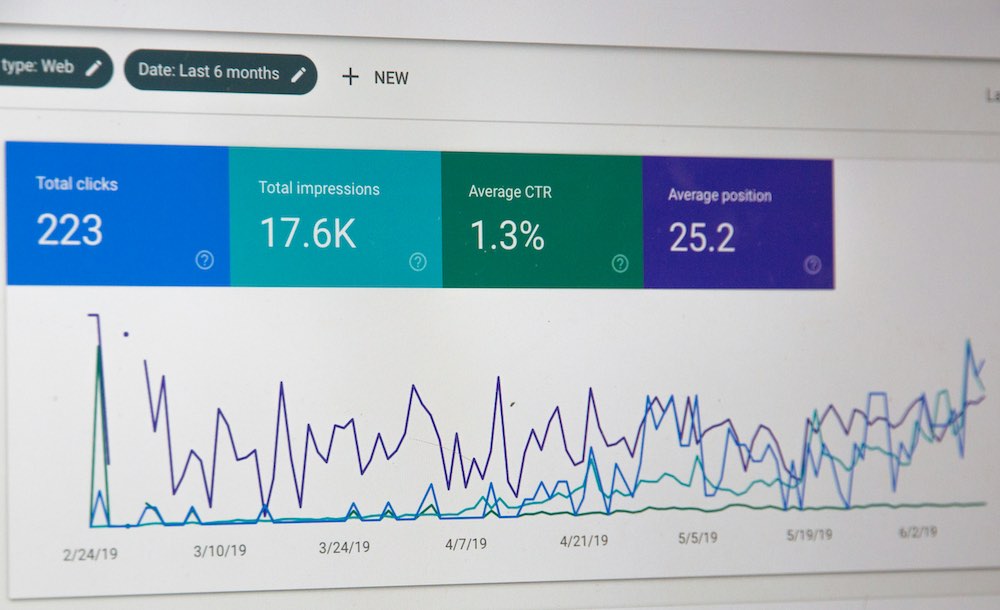
Knowing and understanding the analytics of your website is essential to make decisions about your strategy.
For a presence website, success might mean delivering clear information, establishing credibility, and making it easy for customers to get in touch. The important thing is to establish what success looks like from the outset, then use actual website performance to evaluate whether the strategy and its implementation are working.
Tools such as Google Search Console and Google Analytics can help businesses understand how people discover their websites and what visitors do once they arrive.
The goal is a website that does its job.
All of this culminates in a strong website strategy. It’s about understanding what your website needs to accomplish and making the decisions that will help it get there.
“Neither approach is better, and neither is wrong. The real measure is whether the website is meeting the agreed-upon business goals.”
Not every business needs a complex website with lots of pages, tons of functionality, or an aggressive lead-generation strategy. Some need a credible online presence that gives people the information they’re looking for. Others need a performance-focused website that actively supports marketing, sales, and business growth.
Neither approach is better, and neither is wrong. The real measure is whether the website is meeting the agreed-upon business goals.
Good website strategy helps eliminate guesswork, establishes priorities, and gives everyone a shared goal to work towards, while making decision-making easier.
- - -by Erin Lynch // Business, Content Strategy, Web Design, Web Development, website strategy


